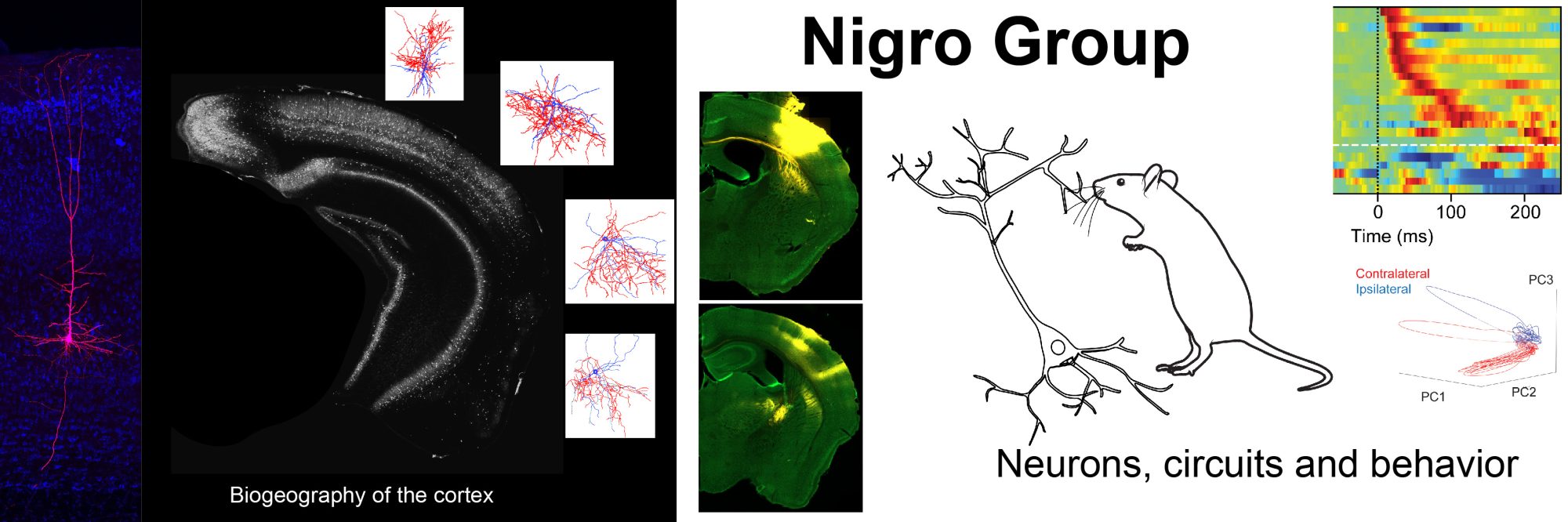
Wrapping up 2023 at Nigro Lab

This has been the third year of the Nigro lab and it has been an year of expansion on many directions. First, the lab welcomed two new lab members: Dr Grethe Olsen and Mr Rejwan Salih.
Dr Grethe Olsen, lab manager
Mr Rejwan Salih, PhD student

A new postdoctoral fellow will start in January 2024, joining our in vivo neurophysiology group.

Scientifically we started our first steps into sensory neurophysiology, spearheaded by Dr Luis Cobar. The invaluable contribution of Rejwan allowed us to make sense of Neuropixel recordings and to move into computational grounds.

Our efforts at studying the diversity of neurons in the cortex lead us to the discovery of a population of GABAergic fast-spiking neurons not expressing parvalbumin, their typical molecular signature. These inhibitory neurons are particularly abundant in association cortices, such as prefrontal and rhinal cortices. We aim to study the functional implications of this biogeography of fast-spiking neurons in the years to come implementing the in vivo methods recently introduced in the lab.

Our work on the sensory physiology of perirhinal cortex and the cellular mechanisms of the perirhinal wall of inhibition were presented by Maximiliano Nigro at the Italian Society for Neuroscience meeting (Turin, Italy) and by Luis Cobar at the Society for Neuroscience meeting (Washington, USA).
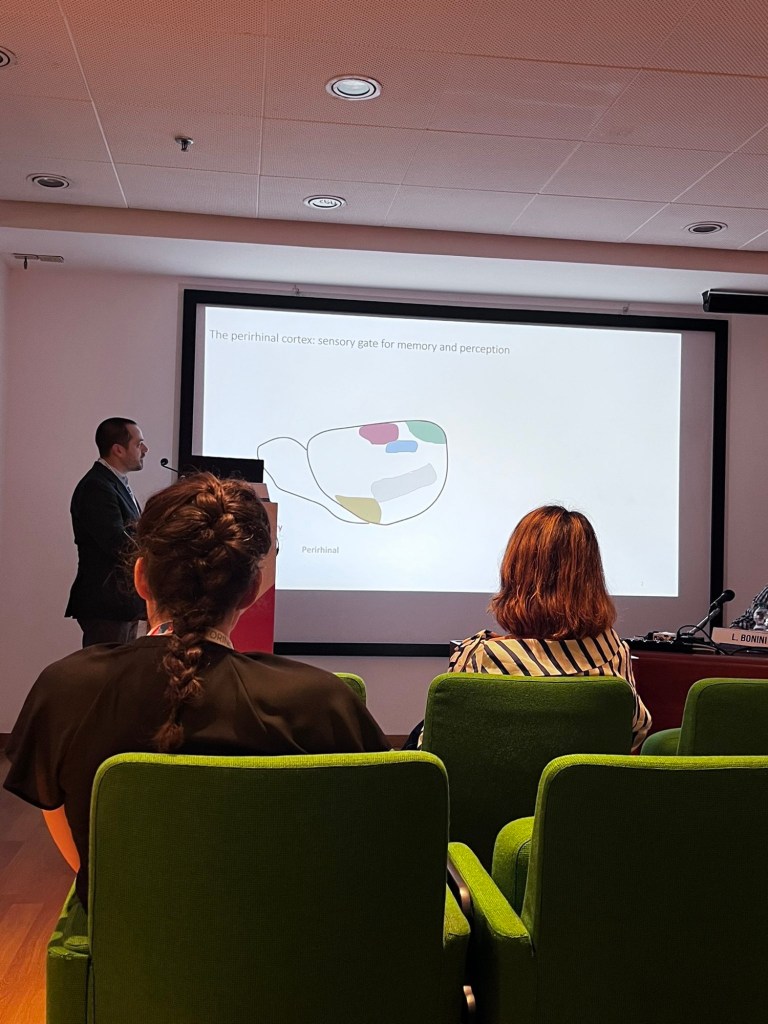
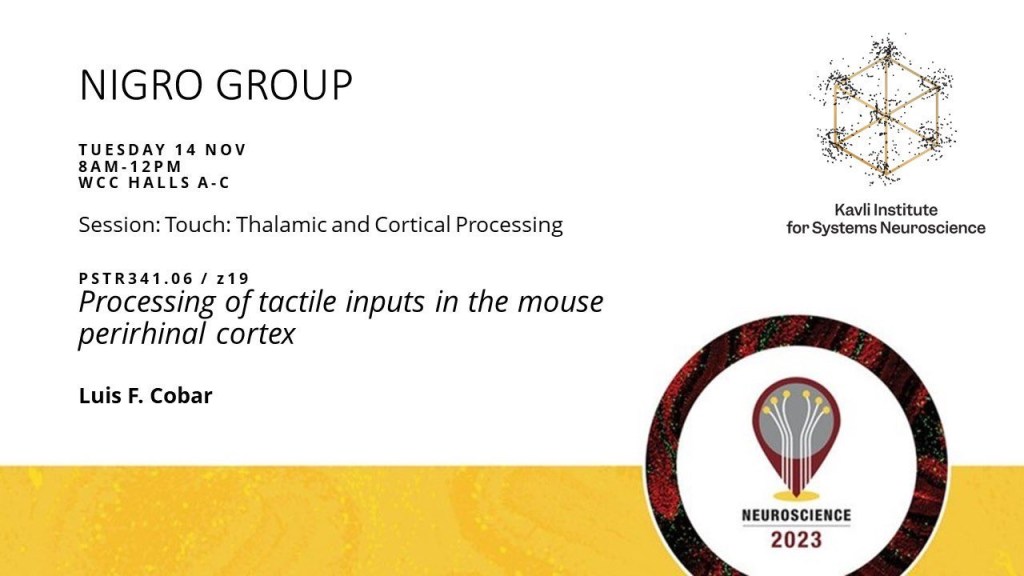
Maximiliano Nigro at SINS 2023

Dr Luis Cobar started his MSCA funded project aiming to study the integration of sensory and emotional information in the mouse perirhinal cortex. This project will open new paths for exploring the ways perirhinal cortex encodes sensory information about objects.
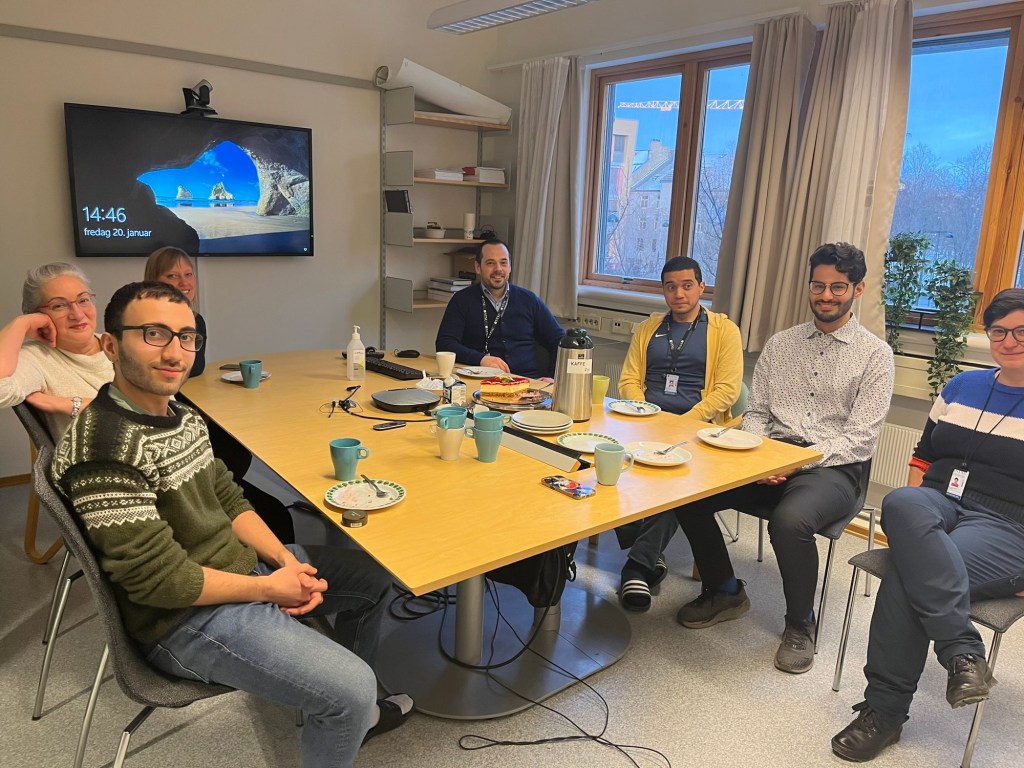
In 2023, the lab graduated two Master students of the Neuroscience program: Mr Adrian Foroughi and Mr Erik Courcelles. Adrian will begin his PhD at NTNU in the lab of Dr Lena van Giesen. Erik, is now searching his way to a PhD after a great job as research assistant with our lab and Dr Giulia Quattrocolo’s lab.
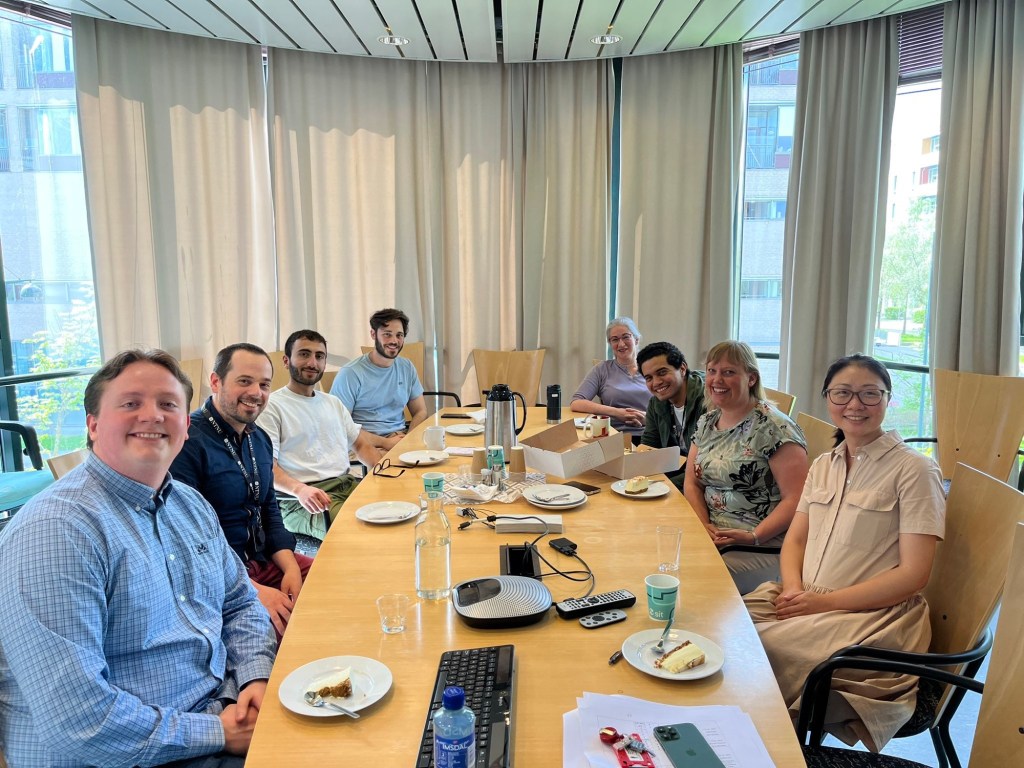
The lab celebrating Erik’s defense
The lab celebrating Adrian’s defense

Next year we hope to keep exploring the diversity of cortical neurons and its contribution to cortical computations.
Home

Welcome to my site

I am a postdoctoral fellow at the Kavli Institute for Systems Neuroscience at NTNU, Trondheim. My long-term goal in science is to unveil the contribution of different types of neurons to brain function

Brain circuits are formed by an astonishing number of different neuron types. Each type of neuron is characterized by specific morphological, physiological and molecular features that allow them to exert specific functions in different circuits. The same features allow neuroscientists to classify these neurons in discrete types, ultimately forming a coherent taxonomy of neurons.

I chose two models to address my research goals: the diversity of cortical GABAergic neurons, and multisensory integration in perirhinal cortex. GABAergic interneurons represent a minority of neurons in the mammalian cortex; however, their wide diversity allows them to participate in specific circuit designs and represent an ideal model to study the relationship between morphology and function. On the other hand, multisensory integration (i.e. the ability to merge information from different senses) is one of the most widespread and distinctive functions of the brain. The perirhinal cortex is a perfect playground to tackle my research interests: it contains a peculiar distribution of GABAergic neuron types that sets it apart from other cortical areas; moreover the perirhinal cortex receives information from all sensory modalities and has been implicated in the creation of multisensory representations of objects.

In this website you will find information about the projects I am working on, including advances, publications, and presentations at conferences. On the Blog page I will post short descriptions of interesting neuroscience articles as well as curiosities of the neuroscience world.

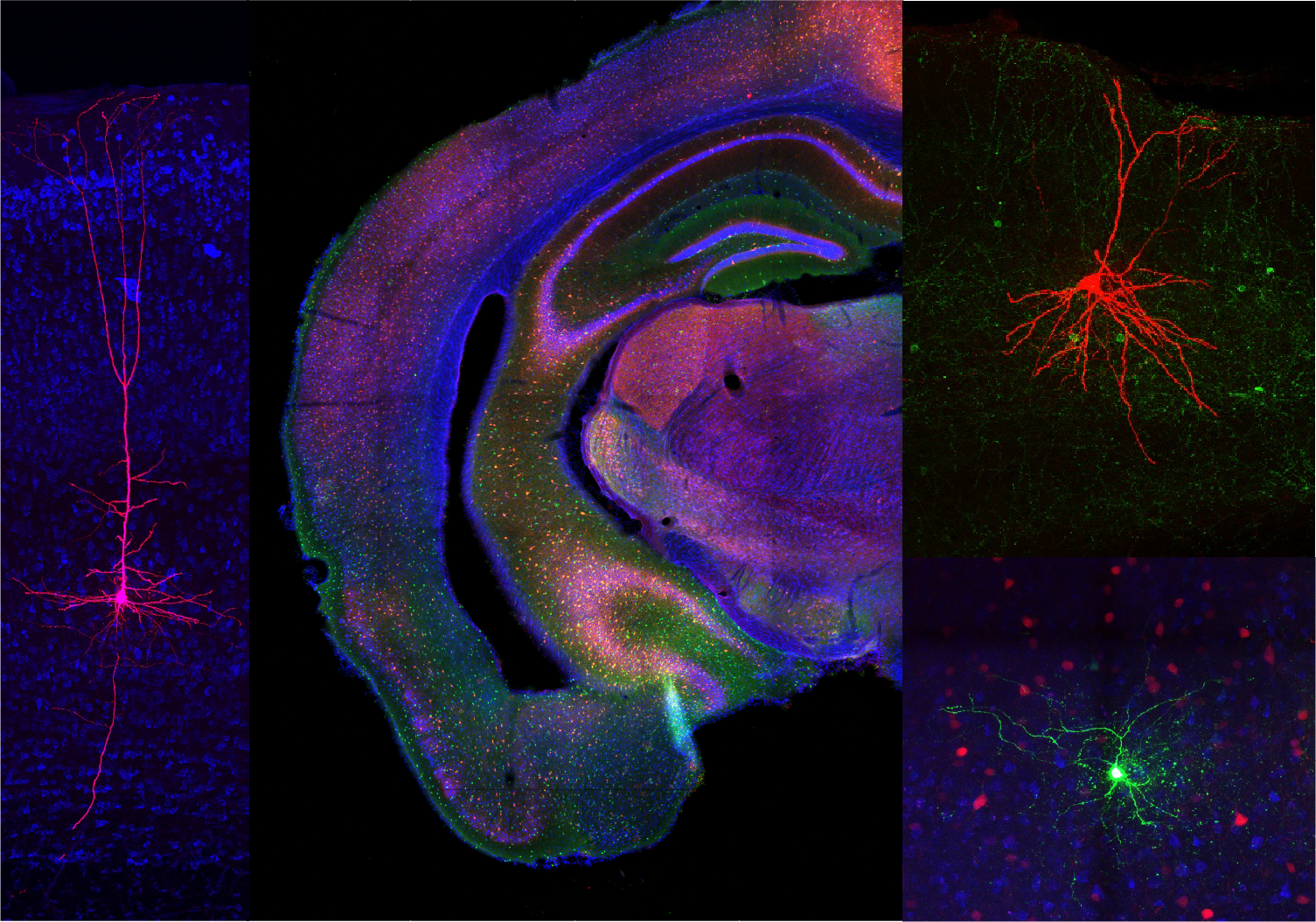
Left, mouse barrel cortex layer 5B thick-tufted pyramidal cell (red), and Nissl bodies stained in blue. Center, hemisphere of a GAD67-eGFP transgenic mouse expressing GFP (green) in all GABAergic interneurons, and immunostained for parvalbumin (red) and Nissl (blue). Upper right, lateral entorhinal cortex layer 3 pyramidal (red), green cells are ChR2 expressing PV cells. Lower right, Biocyting filled CCK interneuron (green) from the perirhinal cortex labeled with a viral intersectional genetic approach (red) and Nissl bodies in blue.